
The short version
- Young adults with ADHD traits scored far higher on proneness to boredom than their peers in a 2025 study.
- Weaker attention control and working memory explained a small part of that difference.
- Boredom can push you toward quick fixes like scrolling, snacking or buying. Planning for it works better than fighting it.
- Carry something small to do, and add a little interest to dull tasks.
The longest ten minutes
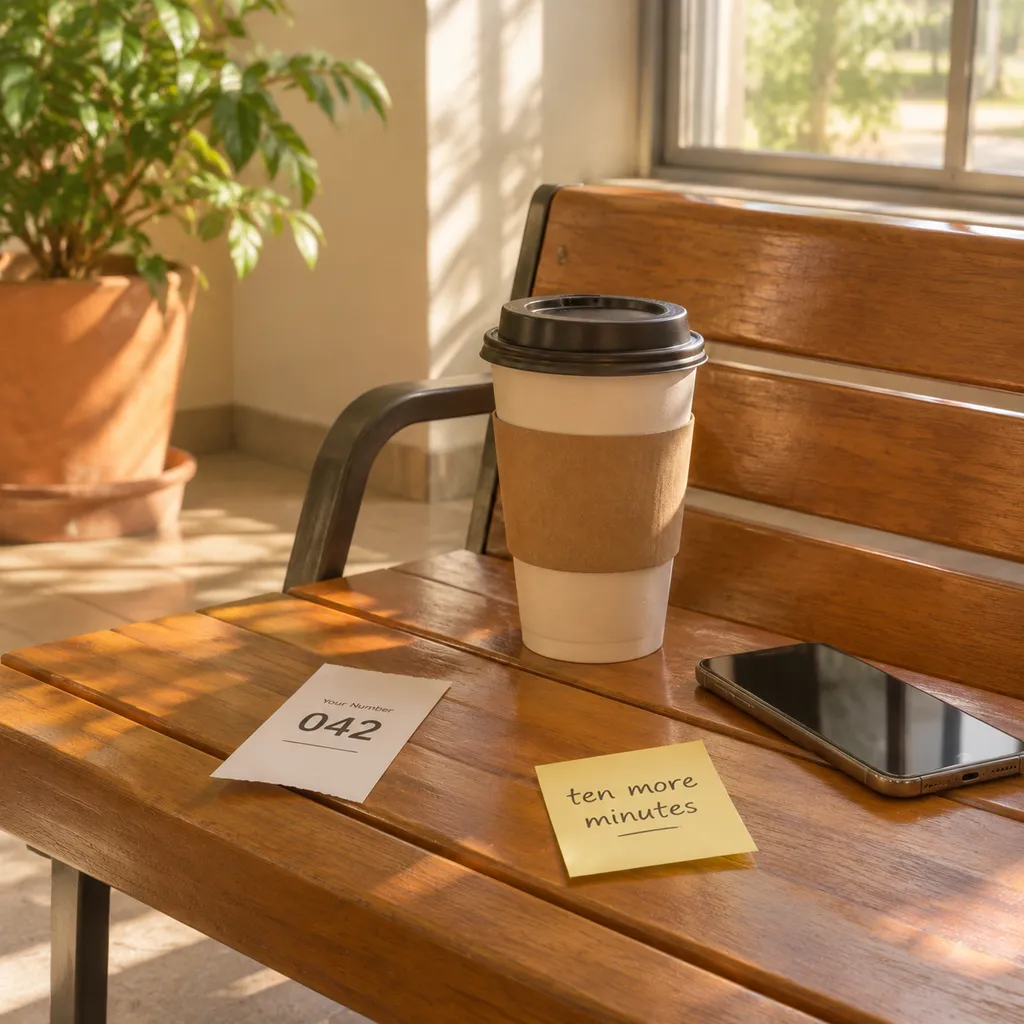
The queue isn’t moving. Your phone is at 4%. There’s nothing to read but a poster about fire exits. After two minutes your leg is bouncing. After five you’re thinking about leaving, even though you need to be here.
Sound familiar?
Adults with ADHD often describe boredom as something physical: restless, itchy, almost painful. Waiting rooms, long meetings, slow films and dull admin can feel unbearable, and the urge to grab something more interesting is very strong.
Maybe you also know these:
- You can’t watch a film without your phone in your hand.
- You start a new hobby because the old one became “boring” overnight.
- You eat, scroll or buy something mostly because there was nothing to do.
- A dull task at work takes all day, and an interesting one takes an hour.
If this sounds like you, it’s a very common ADHD experience.
What research says about ADHD and boredom
The research bitMuch more prone to boredom
A 2025 US study compared 31 young adults with ADHD traits with 57 without. The group with ADHD traits scored much higher on proneness to boredom, a large difference. They also did worse on tests of attention control and working memory, and those two explained a small part of the extra boredom, around 6% each [1].
So attention and working memory are part of the story, and most of it is still unexplained. The study was small and used college students, so it’s a first step.
Boredom matters because of what people do to escape it. Late-night scrolling, impulse spending and staying up too late often start with “there was nothing else to do”.
Planning for boredom
You won’t stop feeling bored. You can have something ready for when it comes.
Try this
- Carry a pocket task. A short book, a puzzle app with no feed, a notebook, a podcast saved offline. Something that isn’t endless scrolling.
- Move a little. Stand, stretch, walk around the waiting room, use a fidget toy. Small movement makes waiting easier for many people.
- Add interest to dull work. Race a timer, use a new pen, do it in a café, or work alongside someone.
- Break long boredom into blocks. “Ten more minutes” feels shorter than “until it’s done”.
- Notice the urge. When you reach for your phone, the snack or the shop, say “this is boredom”. Naming it often takes the edge off.
If your mind drifts off in dull moments, see mind-wandering and blanking for more on that side.
When to look closer
Feeling bored most of the time, with nothing feeling interesting anymore, can be a sign of low mood. It’s worth talking to a doctor about it.